Blog

  • Exploring Petroglyph Canyon: A Journey Through Montana’s Ancient Art and Culture

    In the heart of Montana’s rugged landscapes lies a hidden gem: Petroglyph Canyon. It’s a place where natural beauty and ancient art converge in a mesmerizing display, but it’s far more than just a hiking destination. This canyon serves as a silent storyteller of times long past. Embarking on its scenic trails, every step takes you closer to unraveling the mysteries of an era etched into the sandstone walls for centuries, offering a unique window into the lives, spirits, and beliefs of the region’s ancient inhabitants.

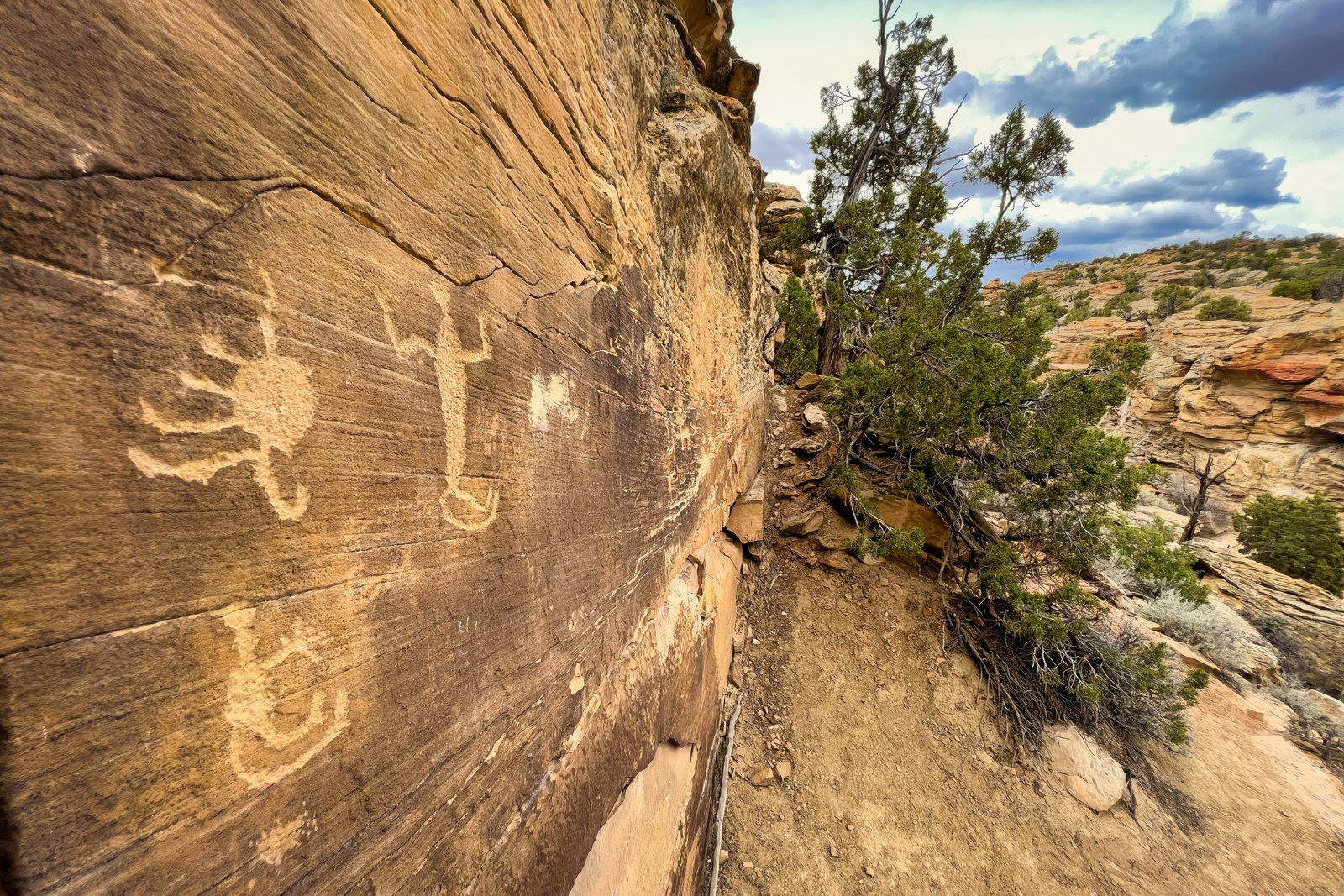
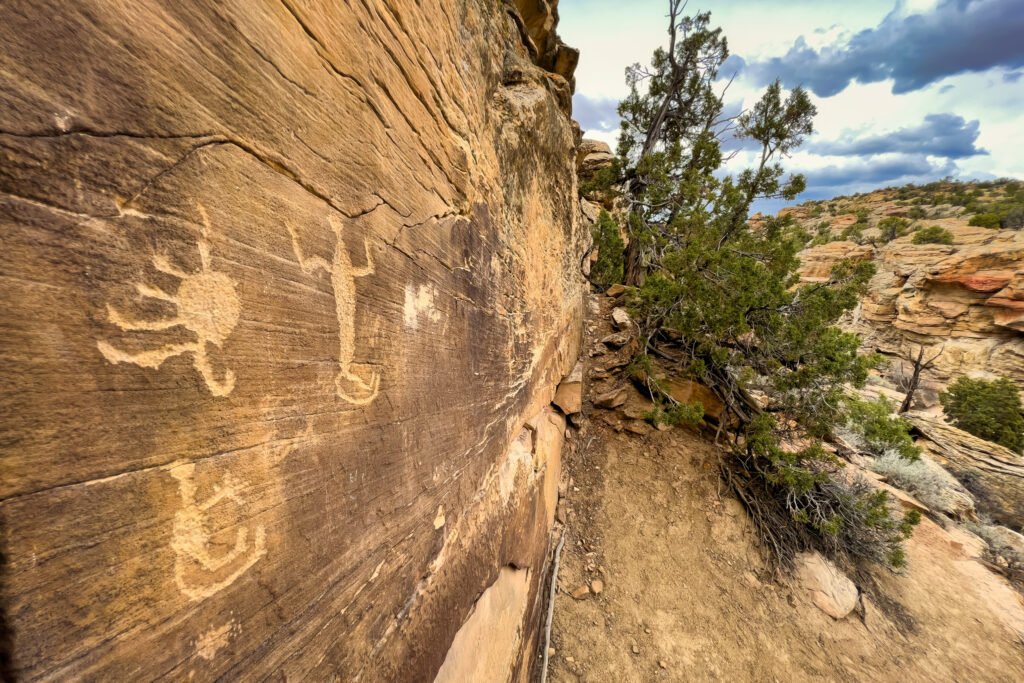
    Petroglyphs of a couple of human figures and a scorpion on the sandstone wall of Petroglyph Canyon
    Petroglyphs of a couple of human figures and a scorpion on the sandstone wall of Petroglyph Canyon

    Geology and Landscape of Petroglyph Canyon

    The canyon’s geology is as fascinating as its ancient art. Known to archaeologists as site 24CB601, the canyon is dominated by the Greybull Sandstone (part of the Lower Cretaceous Kootenai Formation). Over millennia, this stone has weathered into a deep, dark brown “desert varnish,” which provides a striking contrast to the lighter tan color underneath.

    The canyon extends approximately 4 miles, showcasing a breathtaking array of rock formations that look like nature’s own sculptures. These sedimentary layers aren’t just pretty to look at; they were the perfect “canvas” for ancient artists. Because the dark outer crust is relatively thin, pecking through it reveals the bright interior, creating images that pop with incredible clarity even centuries later.

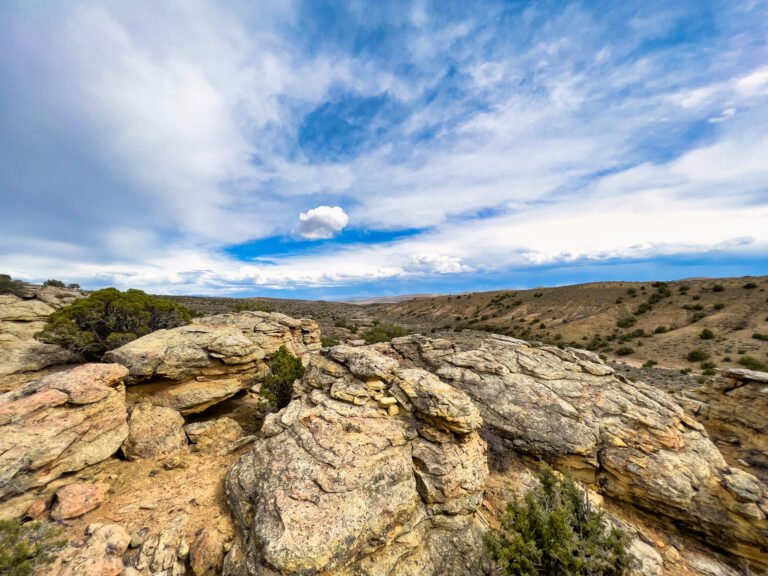
    Somewhere down there is Petroglyph Canyon
    Petroglyph Canyon signage…actually worth a read
    The rough country around Petroglyph Canyon
    Our little group in the depths of Petroglyph Canyon
    The entrance of Petroglyph Canyon and the first glyphs

    Discovering the Ancient Art of Petroglyph Canyon

    Nestled in the foothills of the Pryor Mountains, Petroglyph Canyon is most famous for the En Toto Pecked (ETP) style of rock art. While pictographs (paintings) are common across Montana, these “pecked” sites are much rarer in the Big Sky State, making this canyon a truly unique archaeological treasure.

    The Art of the Peck

    As the name implies, “En Toto Pecked” means the artist didn’t just outline the figure; they meticulously pecked away the entire interior of the image. When you stand in front of these panels, you can almost feel the rhythmic thump-thump-thump of a hammerstone against the wall. The result is a bas-relief effect that feels more like sculpture than simple drawing.

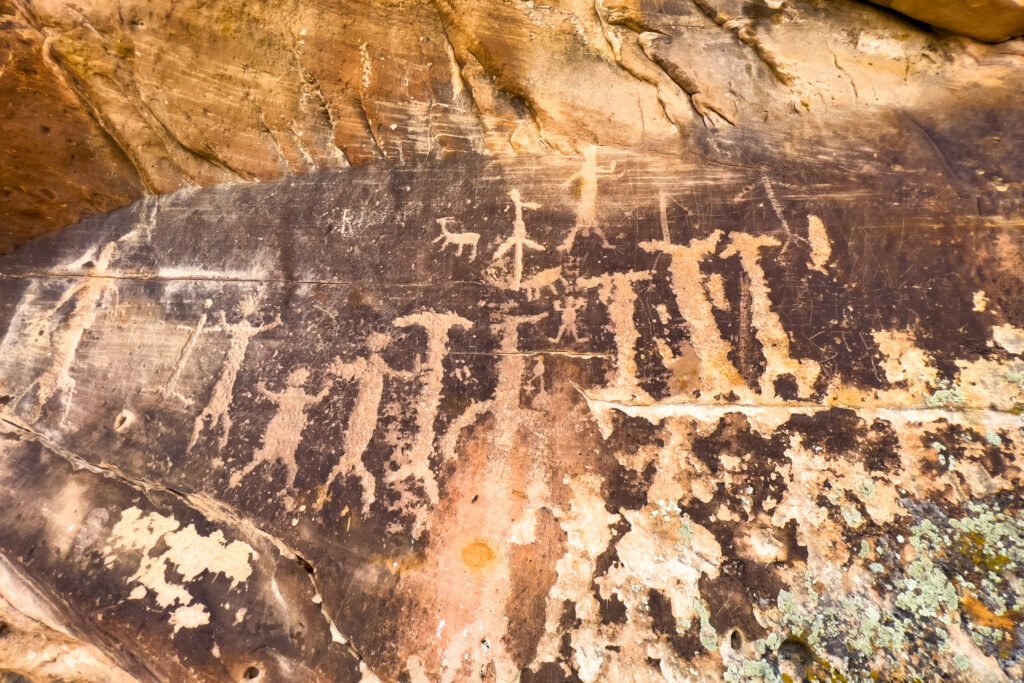
    One of the best petroglyph panels in Petroglyph Canyon
    Various quadruped petroglyphs
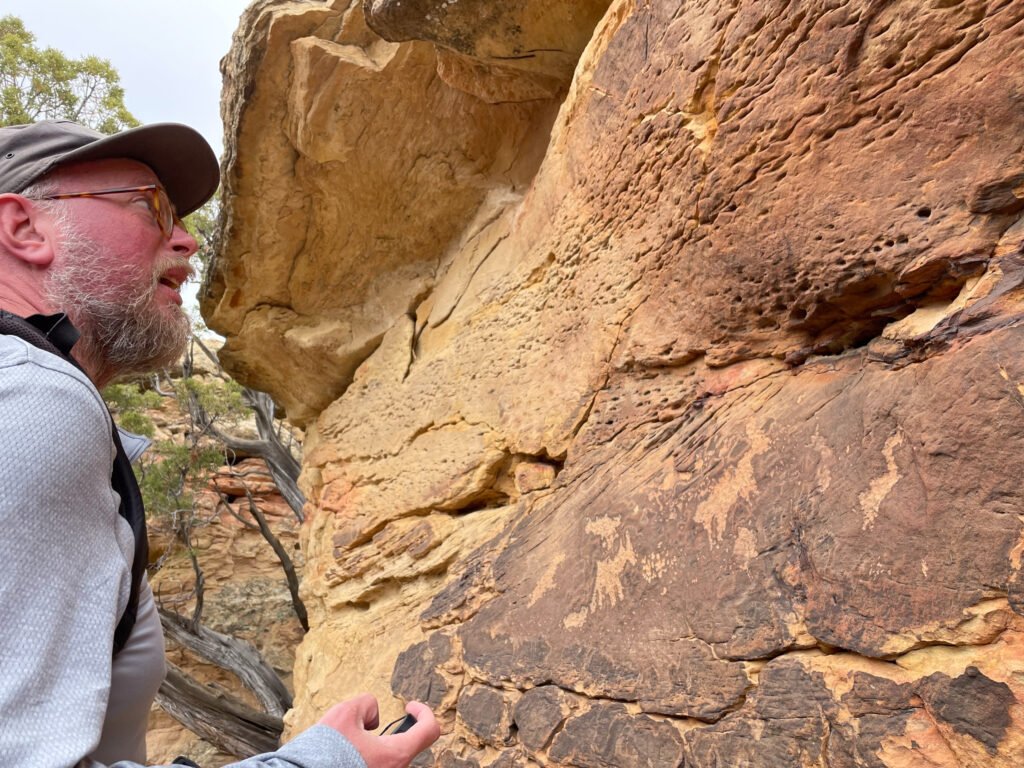
    Radd admiring the petroglyphs
    A great example of En Toto Pecked petroglyph from Petroglyph Canyon

    The Anthropomorphs: Portraits of Spirits and Ancestors

    The human-like figures (anthropomorphs) are the undisputed stars of Petroglyph Canyon. They often appear in rows or groups, standing side-by-side as if posing for a family portrait across time.

    Spirit Lines: Notice the faint lines extending from hands or heads, sometimes crossing cracks in the rock. Archaeologists believe these represent “spirit lines” or “puha” (power), signaling a shaman’s connection to the spirit world through the “portal” of the stone.

    Diverse Forms: You’ll see everything from round-bodied figures to linear, “stick-man” styles. Some have bulbous heads, while others have no heads at all—perhaps representing different spiritual states or specific individuals.

    The “Gifted” Figures: Many figures feature exaggerated sexual organs. In ancient cultures, this often wasn’t about “indecency” but was instead a powerful symbol of fertility, lineage, and the continuation of the tribe.

    Profile Views and Seated Figures: While most figures face forward, keep an eye out for the rare profile-view anthropomorphs. Some are even shown in a sitting position, a stylistic choice that hints at a connection to the Dinwoody Tradition found further south in Wyoming.

    Leaping humaniod petroglyph
    A more stylized humanoid figure
    Petroglyph Canyon panel of humanoid figures
    These guys are “gifted”
    Humanoid figure with a bow
    One of the unusual sitted humanoid petroglypphs from Petroglyph Canyon

    The Animal Kingdom

    Alongside the humans, the ETP petroglyphs showcase a variety of animals that were central to ancient life.

    The Advent of the Bow: Some figures are shown holding bows and arrows. Since we know the bow and arrow arrived in this region around 500 A.D., these specific carvings give us a “fixed point” in the timeline of the canyon’s history.

    The Humped Giants: You’ll find unmistakable depictions of bison. One particularly famous bison in the canyon is shown with “blood” (red pigment added later) coming from its mouth or nose—a vivid, haunting image likely representing a successful hunt.

    The Bighorn and the Thunderbird: Look for the swept-back horns of the bighorn sheep and the wide-winged silhouette of the thunderbird. These weren’t just food sources; they were spiritual entities. The thunderbird, in particular, is a powerful figure across many Plains cultures, associated with storms and protection.

    A thunderbird petroglyph from Petroglyph Canyon
    Buck and doe deer
    What quadruped do you see?
    Bison calf bleeding from the face

    A Chronology Written in Stone

    Dating rock art is notoriously tricky, but thanks to radiocarbon dating of nearby hearths and the study of rock varnish, we have a good idea of the timeline. Most of the ETP art here spans from roughly 2,600 years ago to about 1,000 years ago.

    However, some of the more heavily weathered carvings might be much older, potentially dating back to the Early Archaic period (8000–6000 B.C.). It’s a humbling thought: while empires were rising and falling in other parts of the world, people were standing right here in this canyon, leaving their mark for us to find.

    A Convergence of Cultures

    Petroglyph Canyon isn’t just an art gallery; it’s a cultural crossroads. The ETP style links the ancient inhabitants of Montana to tribes in Nevada and Idaho, specifically the Shoshone.

    The canyon also sits within the ancestral heartland of the Apsáalooke (Crow) people. To the Crow, this region—including nearby Weatherman Draw (the “Valley of the Shields”)—is a “cathedral without a roof.” These sites were used for vision quests, prayers, and recording history. When you visit, you’re walking through a sacred landscape that remains deeply significant to sovereign nations today.

    The Hiking Trail: A Journey Through Time and Nature

    The trek through Petroglyph Canyon is a roughly 4-mile round trip that is as much a geological tour as a historical one.

    Respect the Stone: This is a National Register of Historic Places site (listed in 1975). The oils from your skin can damage the rock and the varnish, accelerating erosion. Look, but never touch. Modern archaeologists now use a digital tool called DStretch to see faded art without ever touching the rock—let’s follow their lead and preserve these “Sacred Stones” for the next thousand years.

    The Drive: Getting there requires a bit of effort. You’ll head down Gyp Springs Road outside of Warren, MT. A high-clearance SUV or 4×4 is highly recommended, as the two-track road can get “sporty” with deep ruts and rocky ledges.

    The Hike: There is no official “paved” trail. You’ll wander over sand dunes and drop into the canyon bottom. Keep your eyes peeled—many of the best panels are tucked behind large boulders or slightly up the canyon walls to protect them from the elements.

    Petroglyph Canyon’s Role in History and Culture

    Since its official recognition in 1975, Petroglyph Canyon has been a focal point for understanding the cultural and historical narratives of Montana’s ancient inhabitants. The distinct styles of petroglyphs found here offer clues to the migration patterns and social structures of the people who once roamed these lands. By studying these ancient artworks, archaeologists and historians have been able to piece together aspects of their daily lives, spiritual beliefs, and interactions with the natural world. The canyon serves as a vital link in piecing together the region’s past, offering invaluable insights into the lives and beliefs of its earliest settlers.

    Figures like this with bow and arrow users were most likely made after 500 A.D., after the advent of the bow and arrow.

    Petroglyph Canyon stands as a testament to the enduring nature of human expression. As we explored its depths, the silence of the canyon felt heavy with stories. It’s a place where every rock holds a secret, and every step is a reminder that we are just the latest visitors in a very, very long line of misfits who have called these mountains home

  • Hiking the Napali Coast Trail to Hanakapi’ai Beach

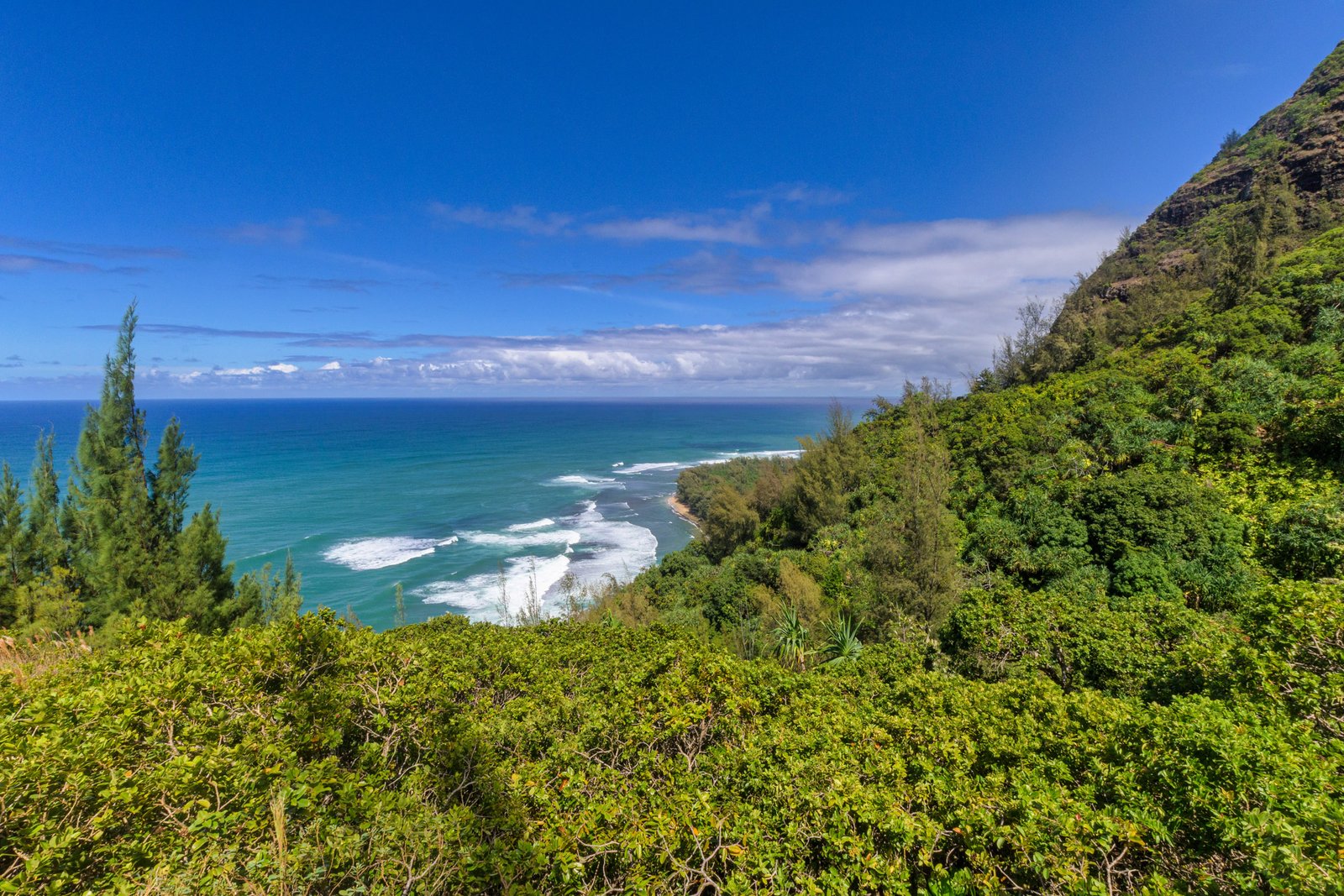
    What a treat it was to explore the Napali Coast Trail with Vida, and we were primed for an adventure along Kauai’s rugged northwest shore. Towering cliffs, lush valleys, and hidden beaches beckoned, and our destination was Hanakapi’ai Beach. This journey was not just a physical escapade; it was an  exploration of the untouched beauty of nature, shared between two adventurers.

    The Kalalau Trail trailhead was located near the iconic Ke’e Beach. The landscape immediately enveloped us in the vibrant palette of the Napali Coast, with colossal cliffs juxtaposed against the Pacific’s azure expanse. We found ourselves navigating a path through dense foliage, a gateway into the heart of this pristine natural wonder.

    The two-mile trek along the Napali Coast Trail to Hanakapi’ai Beach unfolded like a over-sensory tapestry. The trail guided us through tropical forests, across babbling streams, and presented dynamic views of the coastline. At every turn, we were compelled to pause, absorb, and capture the mesmerizing landscapes that unfolded before us, and Radd needed to catch his breath.

    Our arrival at Hanakapi’ai Beach was the cherry on top of this Top 10 all-time hike. The secluded crescent of golden sand, embraced by towering cliffs, served as a tranquil haven. The rhythmic symphony of waves against the shore provided a serene ambiance. While swimming was discouraged due to strong currents, the beach invited us to revel in relaxation, sharing a moment of respite and reflection amid the untamed surroundings.

    Be sure to bring the essentials like water, snacks, sunscreen, and hats (lucky for us, Vida is a mobile convenience store). Make sure to have good traction shoes stability on the occasionally muddy and uneven trail.

    Our hike along the Napali Coast Trail to Hanakapi’ai Beach was more than a physical undertaking; it was a shared odyssey through the unspoiled beauty of Kauai’s natural landscape. The towering cliffs, a secluded beach, and endemic flora and fauna provided a backdrop to our adventure amid the raw splendor of the Napali Coast. A harmonious dance between nature’s grandeur and the spirit of exploration.

    Flora and Fauna

  • A Wayward Black-throated Blue Warbler – Navigational Anomalies in Migration

    In the blink of an eye, I was jumping in Sam Koenen’s “Birdvan” and we were off to chase a Black-throated Blue Warbler that lost its way during migration, and it ended up in an apple tree in small, old Lolo, Montana. Soon after arriving the rarity popped into view as it flitted about the frosted leaves. The bright blue of this bird penetrated through the otherwise gloomy overcast day (damn inversion!).

    Setophaga caerulescens - Black-throated Blue Warbler
    Setophaga caerulescens – Black-throated Blue Warbler

    The Black-throated Blue Warbler (Setophaga caerulescens), a visually striking migratory songbird, predominantly breeds in the eastern regions of North America and winters in the Caribbean. This species engages in a remarkable migratory journey at night, usually east of the Mississippi River and often in small groups, but not without occasional deviations from the expected route. These instances are termed “vagrancy.”

    Songbird migration involves a sophisticated navigational system in which the Black-throated Blue Warbler relies on celestial cues, geomagnetic information, and environmental landmarks. Nevertheless, factors such as adverse weather conditions, artificial light pollution, and anthropogenic landscape alterations can contribute to navigation errors, compelling these birds to stray from their intended migratory path.

    Studies on bird migration have investigated the impact of weather conditions on avian navigation. Strong winds and inclement weather, especially for young, inexperienced individuals, can disrupt the bird’s ability to adhere to its intended migratory route (Alerstam, 2006). 

    Setophaga caerulescens - Black-throated Blue Warbler
    Setophaga caerulescens – Black-throated Blue Warbler

    Light pollution, resulting from urbanization and human activities, represents a contemporary threat to migratory songbirds. Birds like the Black-throated Blue Warbler, which undertake nocturnal migrations, may become disoriented by artificial lights, leading to navigational errors (Longcore & Rich, 2004). As the human tumor expands, the impact of light pollution on avian migration will be increasing disruption, underscoring the need for mitigation strategies to minimize its disruptive human-caused effects.

    Anthropogenic alterations to landscapes also play a role in shaping migratory routes. Habitat loss and fragmentation, linked to human development, can force birds to navigate through unfamiliar territories, increasing the likelihood of errors in their migratory trajectory (Sekercioglu, 2006). Conservation efforts must thus focus on preserving and restoring natural habitats to maintain the integrity of established migratory routes.

    COPYRIGHT RADD ICENOGGLE

    While the phenomenon of vagrancy adds intrigue to birders with the prospect of a rarity, it also underscores the vulnerability of migratory species like the Black-throated Blue Warbler to various anthropogenic and environmental challenges. A comprehensive understanding of these challenges is essential for crafting effective conservation strategies that address human-induced factors influencing avian migration. As researchers and conservationists continue to unravel the intricacies of bird migration, the imperative to safeguard these species becomes increasingly apparent in the face of a rapidly changing world.

    References:

    Alerstam, T. (2006). Conflicting evidence about long-distance animal navigation. Science, 313(5788), 791-794.

    Longcore, T., & Rich, C. (2004). Ecological light pollution. Frontiers in Ecology and the Environment, 2(4), 191-198.

    Sekercioglu, C. H. (2006). Increasing awareness of avian ecological function. Trends in Ecology & Evolution, 21(8), 464-471.

  • The Oʻahu ʻAmakihi: A Glimpse into its Biology, Endemism, Evolutionary History, and Phylogeny
    Oʻahu ʻAmakihi - Chlorodrepanis flava
    Oʻahu ʻAmakihi – Chlorodrepanis flava

    Two shots…I got just two shots of an Oʻahu ʻAmakihi (Chlorodrepanis flava), and two photos were enough to scratch my Hawaiian endemic itch. Endemic to the island of Oahu (particularly, the wetter southern area of Oʻahu. Endemism refers to the phenomenon where a species is found exclusively in a particular geographic location, and this isolation can play a pivotal role in evolving unique characteristics. This small, vibrantly colored bird offers a fascinating glimpse into endemism, evolutionary history, and phylogeny.

    The Oʻahu ʻAmakih is a striking bird with vibrant yellow and green plumage, adorned with subtle streaks of gray. Typically ranging from 4 to 5 inches in length, these tiny birds are known for their slender, slightly curved bills that are perfectly adapted for extracting nectar from flowers, particularly the ʻōhiʻa lehua (Metrosideros polymorpha). This mutual relationship formed in a delicate dance of co-evolution between the ʻAmakihi and the flora they rely on for sustenance.

    Oahu, a pivotal island in the Hawaiian archipelago, likely played a crucial role in shaping the diverse morphologies observed among honeycreepers. The island’s formation facilitated cycles of colonization and speciation between Kauai and Oahu, contributing to the unique evolutionary tapestry of Chlorodrepanis flava and its fellow honeycreepers.

    Hawaiian honeycreepers are characterized by highly distinctive morphologies and are believed to have originated in the mid-late Pliocene, after the formation of Oahu but before the formation of Maui.

    Nakiki Valley
    Nakiki Valley

    Before the advent of molecular phylogenetic techniques, the classification of Hawaiian honeycreepers, including Chlorodrepanis flava, was a subject of controversy. Some authorities categorized them as a distinct family, Drepanididae, while others considered them a subfamily, Drepanidinae, within the finch family Fringillidae. Recently, the entire group has been incorporated into the finch subfamily Carduelinae.

    Chlorodrepanis flava, the Oʻahu ʻAmakihi, and other Hawaiian honeycreepers are now recognized as the sister taxon to Carpodacus. Their ancestors are believed to have originated in Asia, diverging from Carpodacus approximately 7.2 million years ago. The migration to and radiation on the Hawaiian Islands occurred between 5.7-7.2 million years ago, coinciding with the formation of Ni’ihau and Kauai.